29 October 2026
From Big Bang to Real-Time: How the UK Built a World-Leading Retail Trading Network

There was a time, not so long ago, when placing a trade meant picking up the phone.
An investor would call their stockbroker. The broker would seek a price. The price might move. Another call might be needed. By the time the order was ready to place, the market may already have shifted.
Today, the experience looks very different.
A retail investor in the UK can log in to an online platform, select a stock, request a quote and trade in seconds. Behind that simple user experience sits decades of market transformation: from dealing floors to screens, from voice trading to electronic workflows, from broker-to-jobber relationships to automated networks of liquidity providers.
At the centre of that evolution is one of the lesser-known pieces of UK market infrastructure: the Retail Service Provider network, or RSP.
For many investors, the RSP network is invisible. But for the UK equity market, it has become a vital part of how retail orders are priced, routed and executed. It connects brokers and investment platforms to competing market makers, helping them request prices, search for liquidity and support best execution for end clients.
 Sources: Financial Conduct Authority, Infront
To understand why it matters, we need to go back to the moment that reshaped the City.
The Big Bang That Changed the City
On 27 October 1986, the UK financial sector entered a new era. The reforms that became known as the Big Bang transformed the London Stock Exchange by abolishing fixed commissions, ending the old separation between brokers and jobbers, opening membership to outside ownership and accelerating the move from floor-based trading to screen-based systems.
The reforms were not a simple technical adjustment. They changed the structure, economics and culture of the City.
Before Big Bang, London’s equity market was built around clear institutional roles. Brokers acted for clients while jobbers made markets. Commissions were fixed. Membership was restricted. Much of the market operated through personal relationships, phone calls and physical presence.
After Big Bang, competition increased. Banks entered securities trading at scale. Technology became more important as trading firms needed capital, connectivity and systems capable of operating in a faster, more open market.
It was the beginning of a long transition from analog markets to electronic markets.
From Voice Trading to Electronic Execution
The first major shift was from telephones and trading floors to screens. What had once depended on human intermediation began to move through electronic systems. Price discovery became faster. Market access became more scalable. Information moved more quickly between participants.
By the late 1990s, the dot-com boom accelerated another wave of change: the rise of online investing.
Retail investors were no longer dependent on calling a broker during market hours. New digital platforms made investing more accessible, while the internet changed expectations around speed and access. Investors wanted to see prices, make decisions and trade from a screen.
But giving retail investors a digital front end was only part of the challenge.
Behind every “buy” or “sell” button, brokers still needed access to liquidity. A way to request prices from market makers, compare quotes and execute trades efficiently. They needed infrastructure that could support high volumes of retail flow without relying on slow manual processes.
That is where the RSP model became so important.
What is the RSP Network?
The RSP network is an electronic request-for-quote model used in UK retail equity trading.
When a retail investor places an order through a broker or investment platform, the broker sends a quote request to connected market makers. Those market makers respond with executable prices. The broker can then accept the quote and execute the order, often on a fill-or-kill basis.
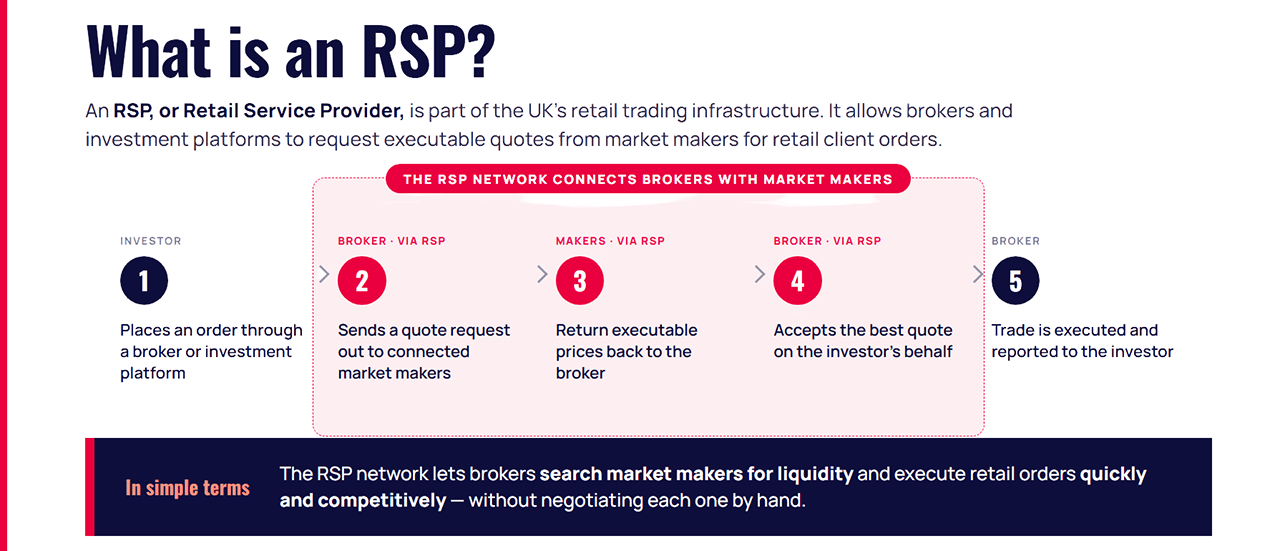
In practice, this creates a competitive environment for retail order flow. Rather than relying on one liquidity source, brokers can request prices from multiple market makers and seek an executable quote for the client.
For each request, approximately 10 to 15 equity market makers provide quotes to retail brokers. These market makers execute against their inventories and earn the bid-offer spread.
Why the UK Model is Distinctive
The UK’s retail trading model is different from many other markets.
In the US, for example, retail execution has often been associated with payment for order flow. In the UK, the RSP model is built around competing quotes from market makers and a regulatory environment in which firms must show evidence of best execution.
For brokers and platforms, the appeal is practical. RSP connectivity helps them access market-maker liquidity without needing to build every connection directly. It also enables fast execution workflows, lower operational friction and better visibility over the available price at the point of trade.
For end investors, the benefit is less visible but highly important. The ability to request and receive a tradeable quote quickly, through a familiar investment platform, without needing to understand the market structure behind it.
For market makers, the RSP provides a route to compete for retail flow. For the wider market, it supports liquidity access in UK equities, including areas where order-book liquidity may be thinner.
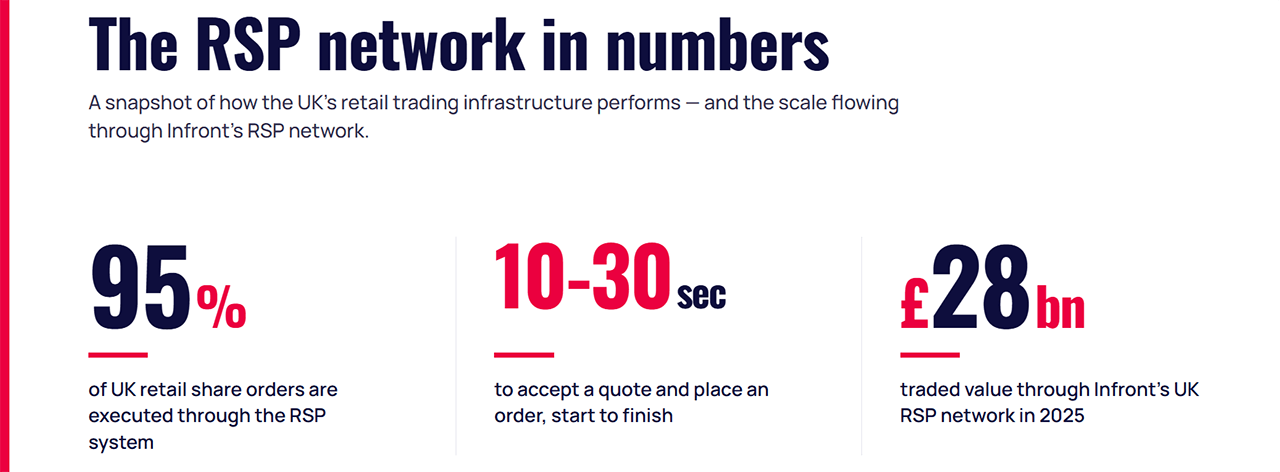
The UK’s Financial Conduct Authority estimates that around 95% of UK stock retail trading is captured by the RSP model. Retail investors may not know the term RSP, but their trading experience often depends on it.
From Market Access to Best Execution
The role of the RSP network has also evolved with regulation.
Today, execution is not just about speed. Firms need to demonstrate that they are acting in the client’s best interests, searching for liquidity effectively and supporting fair outcomes. In that context, the ability to route requests, compare prices, maintain audit trails and evidence execution decisions becomes central to the trading workflow.
This is where the RSP model aligns with a broader shift in the industry.
Trading infrastructure is no longer just about placing an order. It involves connecting market access, quote discovery, order management, compliance evidence and operational control.
In other words, electronic trading has moved from “can we execute faster?” to “can we execute better, with more control, more evidence and more resilience?”
The Next Phase: More Investors, Smarter Infrastructure
The timing matters because retail investment is back on the policy agenda.
The UK government has made clear that it wants to strengthen the country’s retail investment culture, broaden the benefits of investing and support growth through deeper capital markets. The Leeds Reforms, announced in 2025, include a focus on retail investment culture and the role of financial services in improving household financial resilience.
That creates a broader challenge for the industry.
If more people are to invest, the market needs more than engaging apps and simple onboarding. It needs infrastructure that can support trust. Investors need transparent information, clear education and reliable execution. Brokers and platforms need scalable systems that help them search for liquidity, support best execution and manage rising volumes.
The next phase of retail trading is likely to be shaped by the same forces already transforming institutional execution: smarter routing, greater automation and more effective use of data. RSP workflows are already highly electronic, while best execution requirements are increasing the need for firms to evidence how and where orders are routed. As retail and wealth platforms scale, the focus will not only be on faster execution, but on more consistent, transparent and intelligent execution workflows.
But the foundation remains the same: connecting investors to liquidity efficiently and fairly.
The Infrastructure Behind the Investment Experience
For the investor, the experience begins with a few taps or clicks on a screen.
For the broker or platform, the challenge is to deliver infrastructure through the trade workflow. They need execution infrastructure that connects to market makers, supports RFQ workflows, integrates with order management systems and captures the evidence needed for oversight.
That is where providers such as Infront play a role.
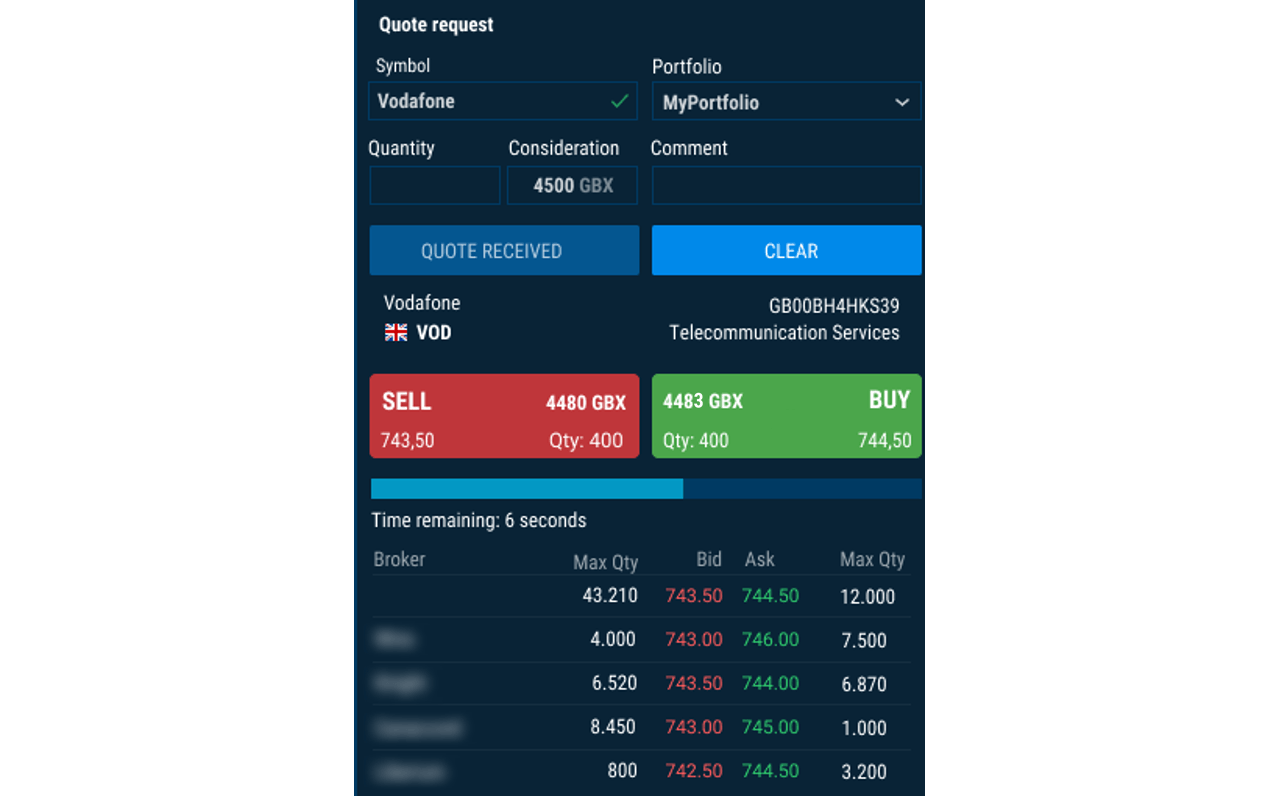 Request quotes from multiple brokers in Infront and compare them side by side
As a major provider of UK RSP connectivity, Infront sits directly inside this market structure.
Through its RSP network, Infront connects buy-side firms and retail brokers to sell-side liquidity providers, helping them request quotes, search for liquidity and execute efficiently through automated workflows. The network is available through the Infront EMS, Professional Terminal, FIX connectivity and digital/mobile applications, supporting the way modern firms want to trade: fast, connected and with the controls needed to support best execution.
That makes Infront one of the major technology providers behind UK retail execution – and a key part of the infrastructure helping brokers, platforms and wealth firms connect investors to liquidity in one of Europe’s most distinctive retail trading markets.
From Big Bang to Bold Future
The Big Bang transformed the City by opening markets, breaking old structures and accelerating the move to electronic trading. The RSP network represents one of the most important chapters in that story.
It took the logic of market making and rebuilt it for the screen-based retail era: competitive quotes, electronic access, faster execution and scalable connectivity between brokers and liquidity providers.
Today, as policymakers look to encourage more people to invest, the importance of that infrastructure is only increasing. The UK cannot build a stronger retail investment culture on education and product access alone. It also needs robust, efficient and transparent execution pathways behind the scenes.
The future of investing may look simple to the end user: a quote, a click, a confirmation.
But the market structure behind that simplicity is the result of 40 years of innovation. From phones to screens, from Big Bang to RFQ, from manual orders to automated execution, the UK has built one of the world’s most distinctive retail trading ecosystems.
And as the next generation of investors enters the market, that infrastructure will matter more than ever.
Build a Trading System Ready for What Comes Next
As retail execution volumes grow and trading workflows become more automated, firms need infrastructure that can keep pace without adding unnecessary complexity.
Download our guide, How to Build a Winning Trading System, to explore five practical ways to modernise your trading setup – from interoperability and modularity to automation, reliability and RSP scalability.