
4 JANUARY 2023
ESG here to stay, along with investor interest

If one thing became clear over the last couple of years it’s that the issues in connection with ESG are surely here to stay. Many people seem to see it as a mere adjective, like ESG-aligned or even sustainable. But people need to be aware that there is much more to it. As a member of the German Sustainable Finance Board said, no one should mistake the risks and the costs of ESG.
We currently face the consequences of air pollution causing thousands of deaths in the EU and worldwide. We see shrinking biodiversity, rainforests, the declining health of the oceans. And last but not least, climate change and ongoing carbon emissions, embedded mostly in supply chains. As the board member stated correctly, all these issues can be influenced and are influenced by people’s choices.
But with time the social issues such as working conditions, diversity and inclusion, war and peace conditions, supply chain social auditing and so on, as well as governance issues need to be taken into consideration when it comes to the decision of where to invest or which company should be taken into a portfolio.
All these factors are a series of risks and at the same time a series of opportunities. Having said that, we see the need for a "reality check". More and more investors are getting fed up with relying only on sometimes non-transparent or even conflicting ratings. And of course, there is the well-known fact that ESG data is also incomplete and often inconsistent, because many companies do not report accordingly. Even now useful ESG information on many emerging market or private-owned companies is still not available. Information on Asia is becoming more critical as it forms a very important part of the world’s economy and supply chains. So, is there an alternative? Investors want the impact to be proven. They want tangible results. Impact Investing could get more important than ESG integration and exclusion.
Main drivers behind ESG
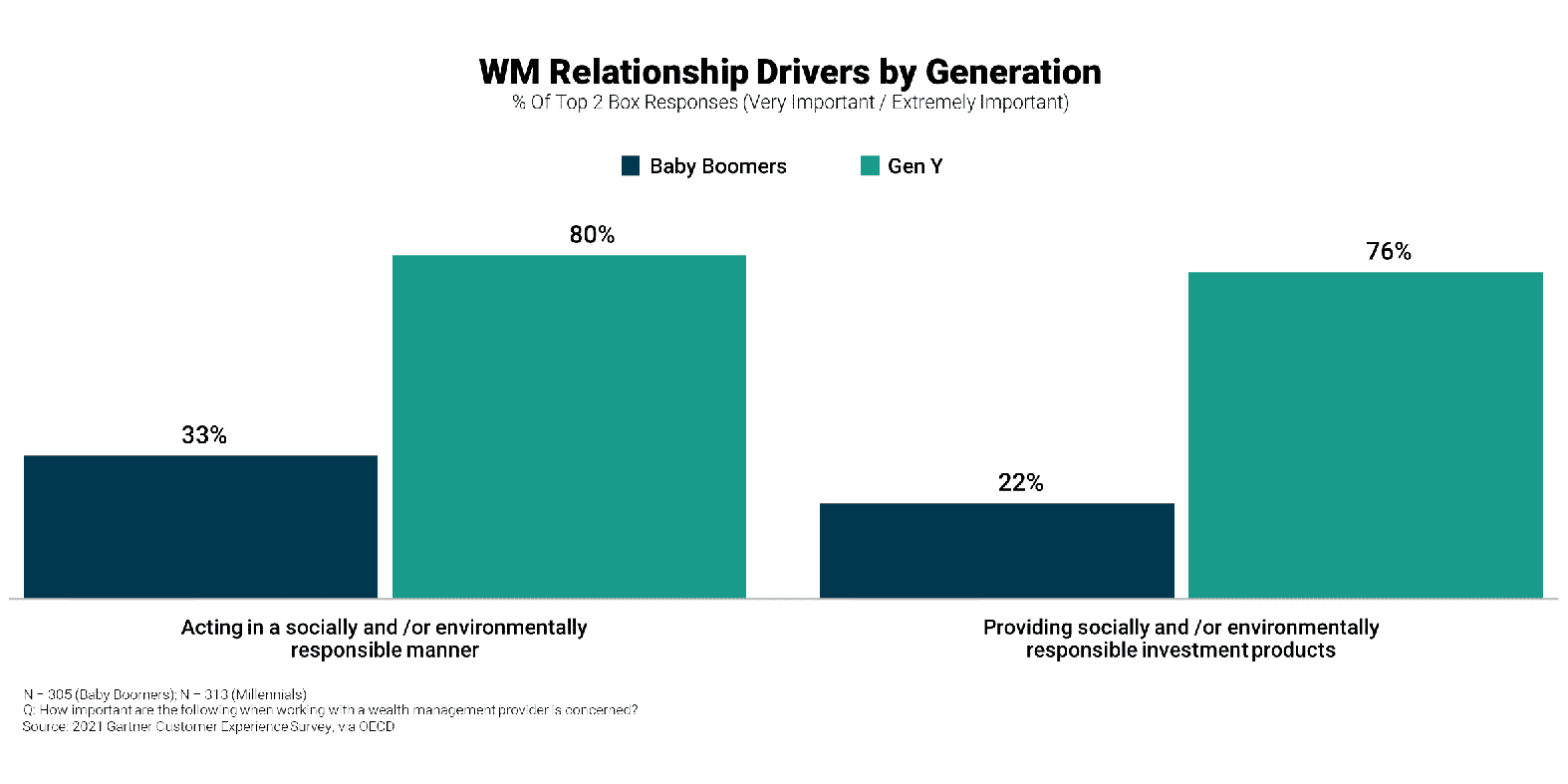
We at Infront see that one of the main drivers behind the whole ESG-environment is transparency for the investors. Under normal conditions, many people would probably not care about ESG criteria. However, in these times of the Paris climate agreement, war financing and sanctions, the energy crisis, as well as diverging political systems reminiscent of the cold war, the importance of investment decisions is clear.
Since we are clearly at a turning point, those decision might have historic importance and need to be reviewed under a completely new light. ESG might be just one milestone on the journey to more transparent investment decisions. But be clear about it, ESG issues are financial issues!
Therefore, it is essential to fully implement the whole spectrum of ESG issues in investment decisions as well as analyze the investment processes accordingly because these decisions could have profound impacts on expected returns and risks. For example, with the ongoing war and the subsequent sanctions, it became evident that the “G” in ESG is as crucial as ”E” and “S”. Russian holdings are now essentially written down to zero as index providers around the world have removed the country from their indices following the introduction of sanctions and the drying up of liquidity as a result.
This proves that a long-term oriented risk management is getting more and more important. And customers need to be informed about the underlying processes and demand to be aware of potential risk.
How does the geopolitical and politic crises affect “ESG”?
The New York Times called ESG in October a “sham”, arguing that ESG managers would continue to own shares in many of the world’s biggest polluters. Especially in the US ESG-investments have become a political matter of faith. That became clear when Texas and Florida barred sustainable managers from running public money for being too successful in driving a so-called “woke” agenda.
It is true that in February and March this year, as a direct result of the exploding energy costs, the demand for ESG funds plummeted. Which even led one investor to the following statement: "Continuing use of coal power, which was unthinkable only a few weeks ago, is now on the agenda across Europe, and the rising price of oil and gas might have persuaded some ESG investors who were in it for the profits, that there may yet be some life left in traditional energy sectors."
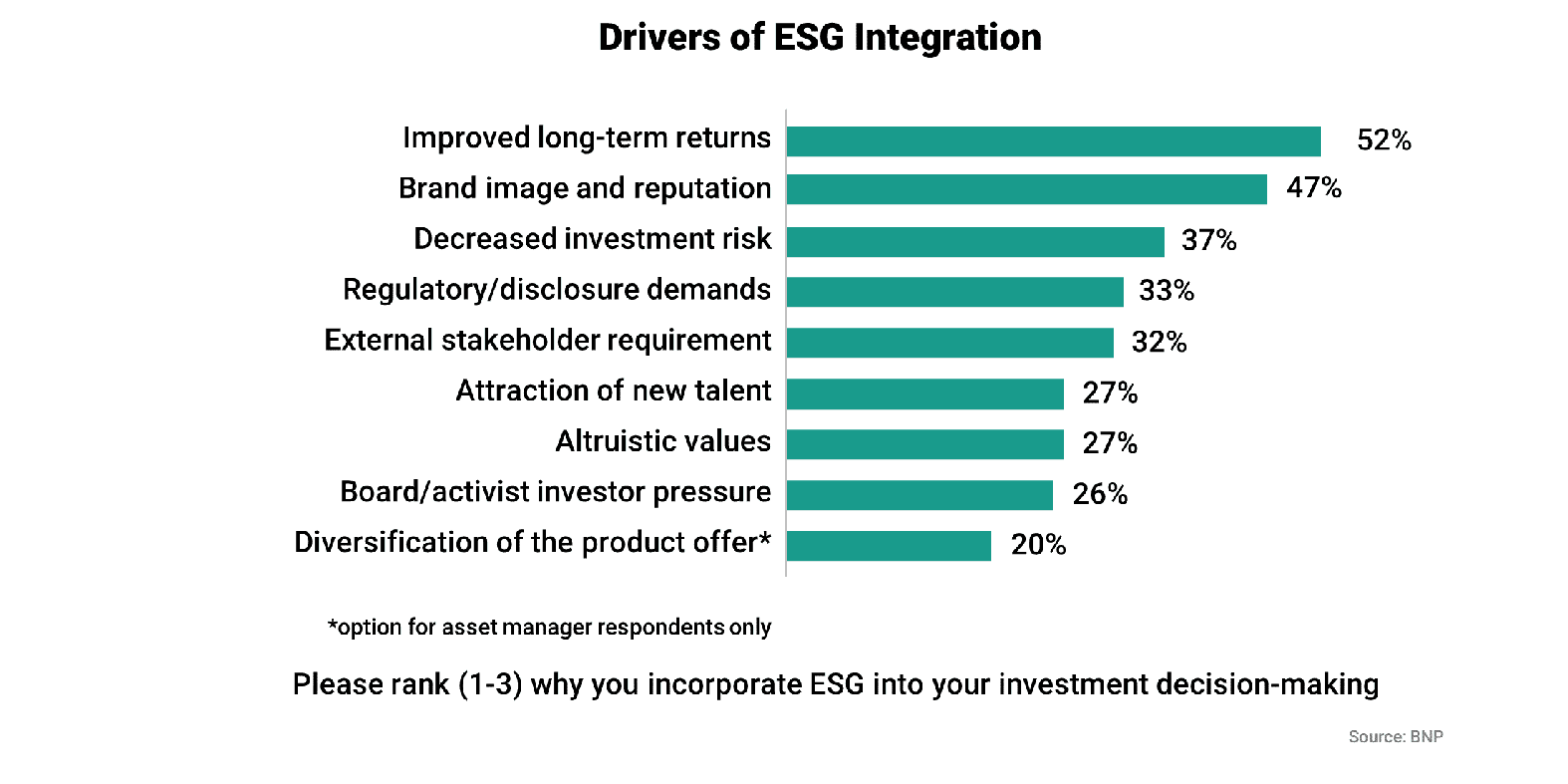
However, the climate crisis and, much more insistently, the regulatory authorities are ensuring that there is no way back. Yes, ESG has its imperfections and there are transparency and credibility gaps. So, ESG may remain an additive until a standardized or unified regulatory framework is in place. But already ESG investors have the potential to improve climate action and to address social and governance issues, such as diversity and inclusion, fair treatment of workers, and so on. It can be seen in exclusions of Russian or Chinese companies. Even critics must admit that ESG has the potential to play a pivotal role and it is increasingly being adopted in strategic decisions around the world. One reason for this is, that ESG has become integral to long-term financial success. In studies such as the latest CEO View by KPMG it was shown that ESG programs improve companies’ financial performance, which includes being able to secure talent, strengthen employee value proposition, attract loyal customers and raise capital. And that the companies are fully aware that their customers demand ESG and transparency about all measures taken.
’Credibility is key’
With the increasing number of investments being labelled either as “ESG aligned” or put into “sustainable funds”, the ongoing discussions about greenwashing and uncertain criteria for ratings, the regulatory demands are growing exponentially. Moreover, it is causing a growing mistrust between investors, issuers and authorities. There are sometimes significant discrepancies between the various rating agencies for an ESG score of the same the corporation. This of course carries the risk of greenwashing.
What is greenwashing?
The International Organization of Securities Commissions (OICU-IOSCO) describes a variety of ways in which greenwashing can occur – described at both the firm and product level, where the characteristics are quite distinct.
On firm level we see the following “greenwashing” events:
- Marketing or communications materials that do not accurately reflect the level and/or extent of the asset manager’s consideration of sustainability-related risks and opportunities in its processes
- The failure of asset manager to meet its public sustainability-related commitments
On the product level there are even more possibilities that a greenwashing event occurs.
- A lack of alignment between the product’s sustainability-related name and its investment objectives or strategies, for example:
- The product’s name refers to sustainability but its investment objectives do not
- The product’s name refers to sustainability but its use of ESG strategies is limited,
- The product’s name refers to sustainability but the asset manager has discretion over the extent to which they pursue a sustainable investment strategy
- The product takes sustainability into account, but:
- Marketing does not accurately reflect the product’s investment objectives and/or strategies,
- The product is marketed as a sustainability-related product but is in fact not
- The product is marketed as focusing on all three ESG components but is only focused on one
- The extent and nature of product’s use of ESG strategies are different than advertised
- There is also the possibility that the product fails to follow its sustainability-related investment objectives or strategies.
- Misleading claims about the product’s sustainability-related performance and results.
- Last but not least, there is the issue of facing a lack of disclosure:
- About the product’s investment strategies
- About the product’s use of proxy voting and shareholder engagement
- About a product’s sustainability-related performance and results
The above points show how it is possible to make a product look greener than it might actually be or simply to rebrand existing funds as green. But, how can this happen? As with most things there are two sides as well.
On the one hand, there are no unified regulations for rating agencies, they don’t disclose the questionnaires and the methods of how they gather their data or the fact that they are widely dependent on getting their work financed with the side effect that the financing parties are the clients at the same time. On the other hand, from the regulator side there is a lack of standardization, integrated regulation and enhanced reporting standards. Sometimes it even seems that regulations contradict each other. All these facts are diametrically opposed to the fact that the financial business is still a business of mutual trust, or at least it should be based on trust. Regulators worldwide are starting to look proactively to identify ESG-related misconduct and clarify the criteria for ESG products. So we think credibility and regulations need to be brought into equilibrium.
Without doubt, there is a need for greater engagement with the whole of society and other interested parties to develop unified reporting and disclosure standards, sustainable finance taxonomies, as well as clear ESG ratings – and make all these available. The most active in the industry need to know what to expect and how to manage the expectations of customers and authorities. Especially regulators must regain their grip, terms and conditions need to be clear in advance – a critical issue as you can see with the Article 9 funds, where criteria were issued only after the first funds were structured.
Sustainability trends to expect
With all the requirements and “buzz words”, what will be the major areas to pay close attention to? We think topics such as decarbonization, net zero targets, a shift toward clean(er) technologies, the circular economy, as well as social and compliance factors will be the most relevant targets.
To summarize it can be said that ESG or sustainability is becoming increasingly important not only for companies, investors, stakeholders and boards of directors but also for regulators. Those regulators worldwide have so far issued only limited direct requirements but are continuously increasing the demands on sustainability reporting and more. This means there are extensive transparency requirements which increase the pressure to act, especially as short application deadlines require swift action.
Corporates as well as investors need to consider sustainability in all their strategic decisions. To deliver this high quality of sustainability reporting, it is essential to define stainability-related targets, gather the underlying data and enhance the systems and processes. The tasks involved in monitoring sustainability reporting will continue to increase and businesses will need to increase the number of specialists they employ.
Key takeaways: Infront’s view on ESG trends in 2023
- In a world of sanctions and climate accords, investment decisions can have historical significance and sustainability needs to be considered in all strategic decisions
- Global environmental trends and the persistence of regulators mean that ESG is here to stay, while more customers are expecting or demanding it for their investments
- Impact investing could become more important than ESG integration or exclusion unless transparency and reporting improves to level the quality of ESG information
If you want to know more about ESG and what trends have been identified, please check out the following links:
ESG Trends and Expectations – Harvard Law School
Environmental, social and governance – Deloitte
2023 business and legislative trends for large enterprises – Wolters Kluwer
ESG investing: Practices, progress and challenges – OECD
One of the hottest trends in the world of investing is a sham – New York Times
The Ukraine crisis and what it might mean for ESG and sustainable investing – WTW
CEO outlook: Great ESG expectations – KPMG
The bright spots in a complicated ESG framework – World Economic Forum