

21 October 2024
The IT pitfall facing European banks
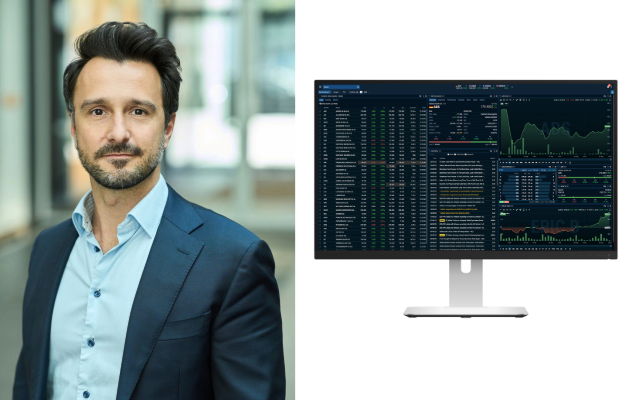
European banks face the significant challenge of modernising their outdated IT infrastructure. Zlatko Vucetic, CEO of Infront, explains the major pitfall banks encounter with IT investments and why the pace of innovation in the financial world is unlikely to accelerate anytime soon.
"Banks won't make a difference by developing just a few flashy apps"
Major software investments in the banking sector often involve tens or even hundreds of millions of euros. However, the cost of not having IT systems properly in order can be even higher. In May, ABN Amro’s quarterly results revealed that not all of their risk assessments met regulatory requirements. As a result, additional capital must be retained, which the bank would prefer to share with its shareholders. This difficult balancing act is typical in the banking sector, emphasises Zlatko Vucetic, CEO of European market leader in wealth management solutions, Infront. Vucetic states: "You'd be surprised how many banks are still using homegrown IT solutions developed 15 to 20 years ago. These systems are in urgent need of an update. Banks need a reliable system that meets all current and future regulatory requirements, but more importantly, allows them to better and more swiftly serve their customers. Developing a few flashy apps isn't going to make the difference."
The Golden Rule in the Software World
A golden rule in the software world is that large clients only deal with large companies. The upcoming wave of investment should therefore benefit the big players. Vucetic explains: "Smaller companies sometimes offer very attractive solutions, but there is an operational risk in partnering with them. No one gets fired for doing business with one of the major players in the software world. To some extent, the same applies to the financial sector. It takes time to build trust in our industry. People are hesitant to entrust their money to a new, unknown bank without a solid reputation or large branch network."
Yet, there are indeed opportunities for newcomers to profit from services traditionally reserved for the banking sector. Vucetic points out: "More and more companies are emerging that focus on small segments of the value chain, rather than trying to replace the entire banking model. Adyen is, of course, one of the best examples. The payment processing system was inefficient and opaque. Adyen's strength lies in how it combines speed, reliability, and transparency. Financial sector companies can learn a lot from that. In my opinion, every player should be asking themselves how they can become faster and more transparent."
Blockchain Technology in Banking Infrastructure
However, Vucetic does not believe that the banking sector is on the verge of major change. In the early part of his career, he spent nearly a decade at Saxo Bank before moving to Focus Vision, a company that develops research and analytics software. Vucetic remarks: "When I started at Infront in 2021, I was often asked if the financial industry had changed a lot. But to be honest, I still saw the same trends and the same products everywhere. The pace of innovation within the sector is quite slow. I believe many policymakers want to speed things up, but it's simply not happening because everyone sticks to products and solutions that have already proven their reliability."
The pace of innovation also varies significantly across Europe. In Scandinavia, banks, brokers, and wealth managers lead the way in digitalisation and technological advancements. Vucetic explains: "I grew up with online banking. It wasn’t until I moved to the United States that I saw a chequebook for the first time. The Netherlands is not far behind Scandinavia, while Germany, due in part to high regulatory pressure, is at the other end of the spectrum. On the other hand, all the major banks in that country are exploring how they can integrate blockchain technology into their infrastructure. In this area, they are much further ahead than other European banks, which shows that technological developments in the sector do not progress in a straight line. For companies like Infront, this creates opportunities across Europe. Despite differences in regulations and innovation speeds, there is a 90% overlap in the products we sell in different countries. That scalability can help us ignite the flame of financial innovation."
How Infront is transforming the wealth management landscape
Infront delivers comprehensive WealthTech solutions designed to streamline processes and enable faster, more informed decision-making. As part of our ongoing commitment to building an efficient, transparent, and future-ready financial industry, we place a strong focus on innovation and data-driven solutions.
With over 30 years of experience, Infront has consistently developed and integrated advanced data, tools, and services that empower more than 3,000 customers to meet the ever-changing demands of wealth management and trading. Our mission is to guide businesses towards a digital future where they can thrive in a competitive, data-centric landscape.
*This article was originally published on Banking & Finance Magazine.