

3 AUGUST 2026
The Rise of the Retail Investor: Building for a New Era of Participation

For decades, capital markets were shaped by institutions. Pension funds, insurers and professional asset managers dominated investment flows, while most individuals participated indirectly through pensions, savings products or managed funds.
That balance is shifting.
Across Europe and globally, retail investors are becoming a more influential force in financial markets. Technology, regulatory reform and generational change are reshaping how people build wealth, with more individuals participating than ever before.
In Europe, retail clients accounted for 31.6% of total assets under management at the end of 2024, up from 26.1% in 2020, according to EFAMA. In 2024 alone, EU households invested €258 billion in investment funds, the second-highest annual figure of the previous decade.
Yet Europe’s transition from saving to investing is far from complete. Around 40% of European households’ financial assets remain in bank deposits. For policymakers seeking to finance growth, innovation and the sustainable transition, mobilising even part of this capital has become an economic priority.
For financial institutions, this creates a significant opportunity. But serving a larger and more diverse retail market requires more than making products available. Firms must provide the information, guidance and digital experiences that help people invest with confidence.
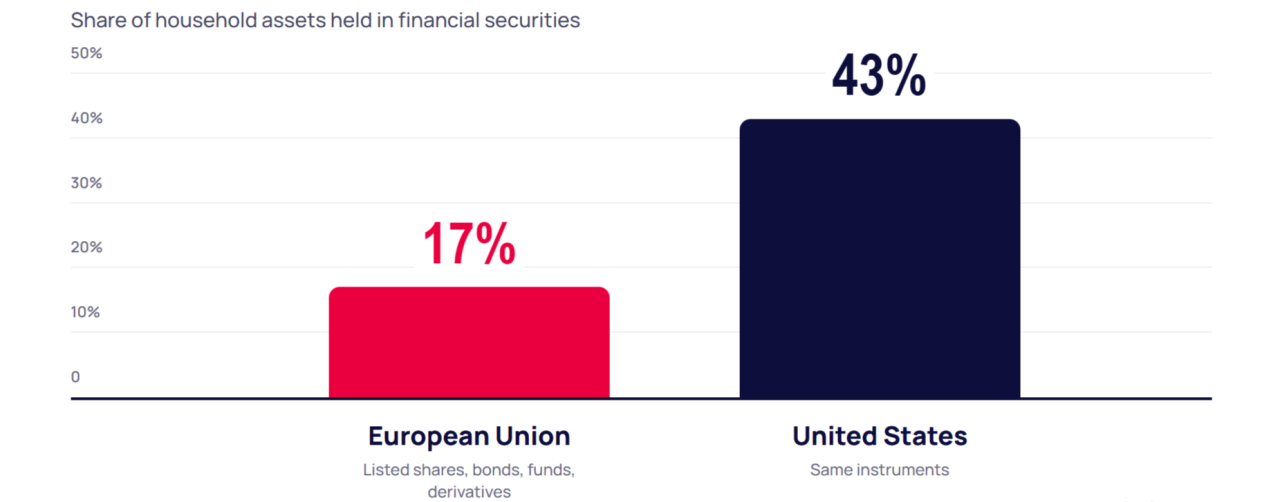 Much of Europe's savings are still sitting on the sidelines compared with the US. Source: European Council analysis, 2021
From Stockbrokers to Smartphones
Individual investors have long owned shares, bonds and investment funds, but participation historically came with substantial barriers.
Trading was expensive and opening an account involved significant paperwork. Market information was often difficult to access or delayed, while product ranges were limited.
Online brokerage platforms began lowering these barriers in the 1990s and 2000s. The growth of exchange-traded funds then made diversified, lower-cost strategies more widely available.
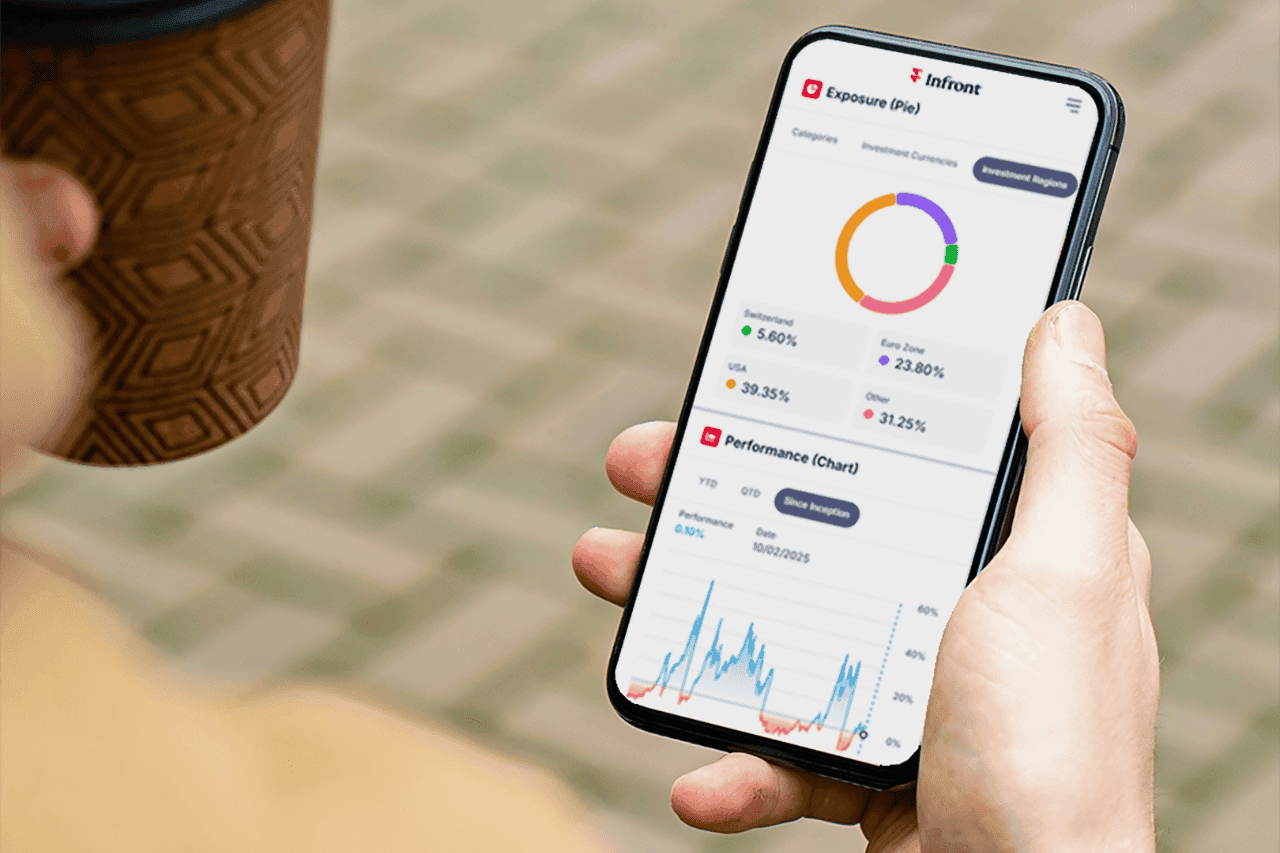
Smartphones, digital identification and app-based onboarding took accessibility further. Investors could open an account, transfer money, review markets and place an order from the same device. Lower fees, fractional shares and automated investment plans also made it possible to start with smaller amounts.
The COVID-19 pandemic added momentum as many people found themselves with more available income and spending more time online, bringing a wave of first-time investors onto digital platforms. Meme stocks attracted much of the attention, but a more durable change was taking place underneath: investing was becoming a mainstream consumer activity.
Today’s retail investors include self-directed traders, long-term ETF investors, users of digital wealth services and clients combining online tools with professional advice. What connects them is an expectation that investing should be accessible, transparent and digitally intuitive.
Policy is Turning Savers Into Investors
Governments increasingly view higher retail participation as important to household financial resilience and economic growth.
Europe has a large pool of household savings, but much remains in cash and deposits rather than being invested in capital markets. This can limit individuals’ potential long-term returns while reducing the capital available to support European businesses.
The EU’s Retail Investment Strategy was introduced in 2023 to increase confidence and participation while strengthening consumer protection. The Council and European Parliament reached an agreement on an updated framework in December 2025.
The package aims to improve investor information, modernise disclosures, demonstrate value for money and ensure consumers are treated fairly. It forms part of the EU’s broader Savings and Investments Union agenda, which seeks to connect more household savings with productive investment.
The UK is moving in a similar direction. Consumer Duty has raised expectations around communications, product value and customer outcomes. The Financial Conduct Authority’s targeted support regime, introduced in April 2026, enables authorised firms to offer suggestions to groups of consumers with common characteristics without providing full individual advice.
The shared objective across the continent is clear: more people should be able to invest, but they must also receive clearer information and more relevant support.
Powering Future Participation
Policy is only one part of the story. Several structural forces are reinforcing the shift and look set to drive the retail investment trend forward into the future.
- Technology has lowered the threshold: Opening an investment account can now take minutes rather than days, with live prices, news, research and portfolio information available through digital channels. Providers can reach wider audiences and scale services at a lower marginal cost.
- The search for long-term returns: Inflation has highlighted the limits of holding too much wealth in cash, while defined contribution pensions are placing more responsibility on individuals to prepare for retirement. Investing is becoming a practical part of long-term financial planning for more of the population.
- Younger generations are starting earlier: The World Economic Forum found that 30% of Gen Z began investing while at university or as young adults, compared with 15% of Millennials, 9% of Gen X and 6% of Baby Boomers. Their comfort with digital tools and online research creates opportunity, but also increases exposure to misleading promotions and unverified advice.
- Product choice continues to expand: Retail investors now have access to ETFs, thematic and sustainable investments, structured products and selected private-market strategies. More choice supports diversification and personalisation, but also increases the need for clear comparison tools and trusted guidance.
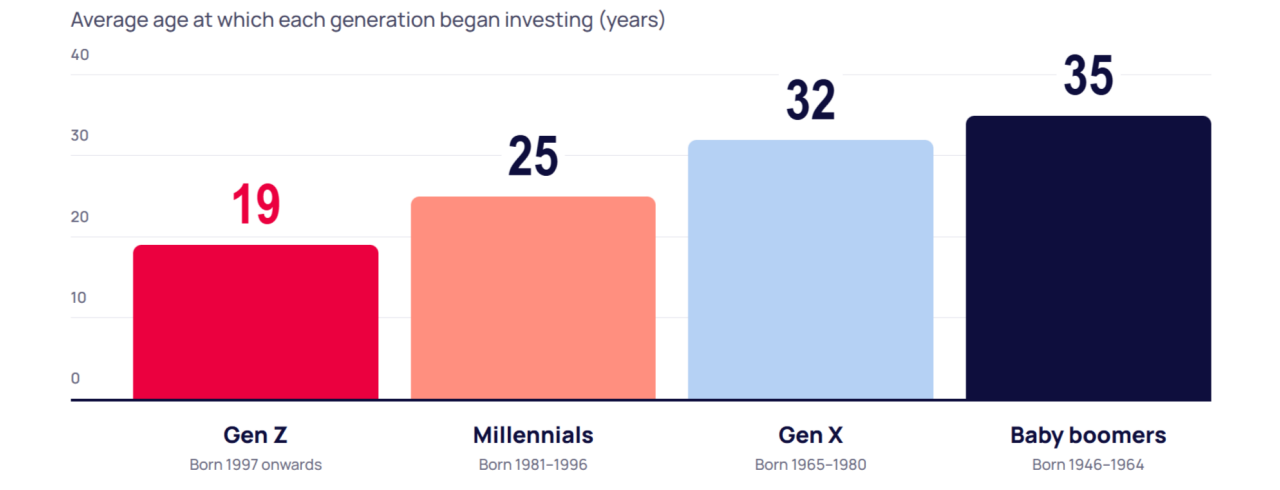 Source: Charles Schwab Modern Wealth Survey 2024
What the Modern Retail Investor Needs
Offering a basic trading function or product catalogue is no longer enough. Investors need an experience that supports the full journey, from discovery and comparison to execution and portfolio monitoring.
Reliable, Timely Financial Data
Retail investors expect current market information wherever they invest. Brokerage applications and digital platforms need dependable pricing, reference data, news and instrument information across asset classes.
Delays, gaps or inconsistencies can weaken trust, particularly during volatile markets when customers depend most on accurate information.
Clear, Embedded Digital Experiences
Today’s investors are used to unified digital experiences in every part of life, from ordering a taxi to booking a holiday. If an investment platform is slow, fragmented or unintuitive, it will stand out for all the wrong reasons. Charts, prices, news, analysis and portfolio views should form part of a coherent journey across web and mobile.
Personalisation can make that journey more powerful. Interfaces can surface relevant information, adapt to customer preferences and provide educational content at the point of need.
Modular widgets and embedded capabilities also allow firms to improve these experiences without rebuilding every data connection or interface. This can accelerate delivery and make services easier to evolve as expectations change.
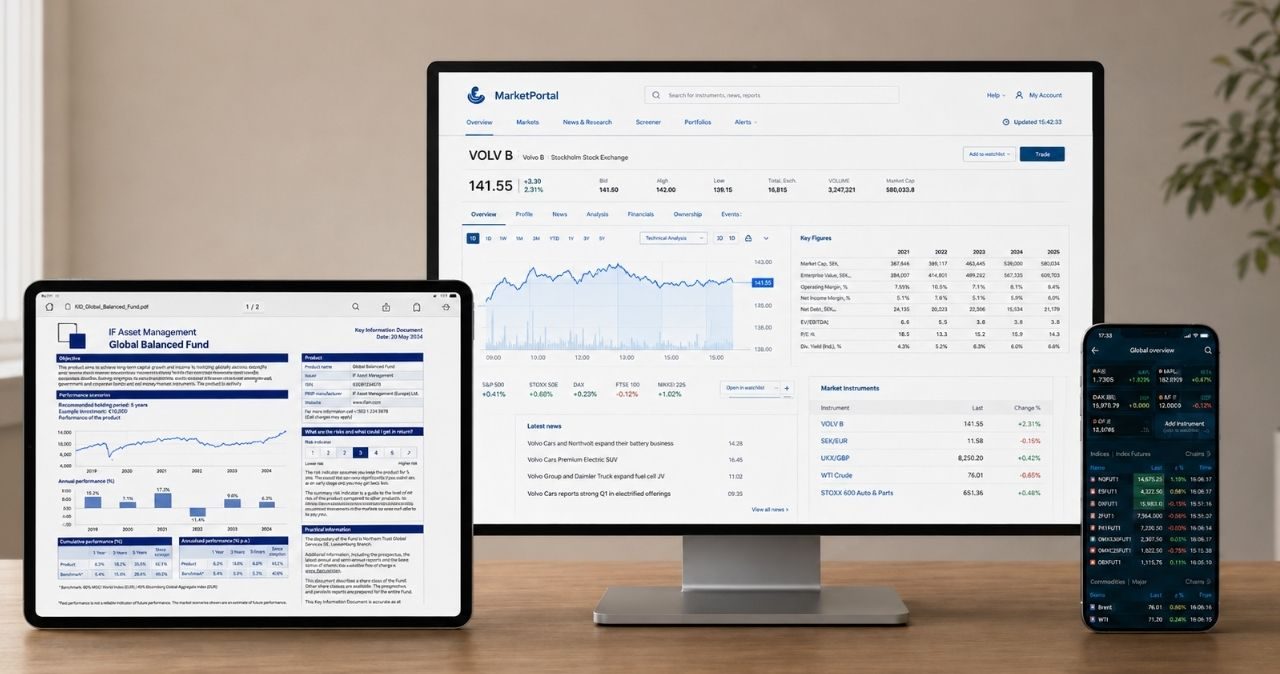 Infront helps institutions to deliver financial data, trading, product comparison, regulatory documents and portfolio oversight to their clients
Better Product Discovery and Comparison
A long list of investments is not the same as a useful experience. Retail investors need intuitive ways to search, filter and compare products using criteria such as asset class, region, risk, cost, performance, income objectives or sustainability preferences.
Effective fund finders and comparison tools bring product data, documents and key disclosures into one structured journey. They help investors narrow their choices while allowing providers to present complex ranges more clearly.
Continuous Access to Portfolio Information
The relationship does not end once an investment is made. Investors expect to monitor performance, review transactions, access documents and understand how their portfolios are changing.
Secure client portals can provide this access at any time. Digital self-service does not need to replace human support. It can free advisers and relationship managers to focus on more valuable conversations.
Building for the Next Generation of Retail Investors
The rise of the retail investor is not a temporary market cycle. It reflects long-term changes in technology, policy, demographics and attitudes towards financial responsibility.
More consumers will expect to invest through the digital channels they already use. More will move between self-directed tools and professional support as their needs change. And more will judge a financial institution by the quality of its digital experience as much as by the products it offers.
The opportunity for banks, brokers, wealth managers and asset managers is significant. A larger retail market can create new revenue streams, deepen customer relationships and connect more household capital with the wider economy.
Capturing that opportunity requires firms to look beyond distribution. They need reliable data, intuitive discovery tools, personalised digital journeys and continuous access to portfolio information. The organisations that bring these elements together will be best placed to turn growing retail participation into lasting customer relationships.
How Infront Can Help
Infront helps banks, brokers and investment firms deliver the digital experiences modern investors expect. By combining real-time financial data, analytics, portfolio tracking and embedded trading capabilities, firms can create intuitive, scalable investment journeys from research through to execution.
Sources:
Charles Schwab, 2024 Schwab Modern Wealth Survey, December 2024
EFAMA, Asset Management in Europe, December 2025
European Council, Press release: Retail investment strategy, December 2025
European Council, Explainer: Retail investment strategy, December 2025
World Economic Forum, New research finds retail investing shift towards younger investors, March 2025
Further Reading Across Infront